The Women Who Raised Fred: The Fosters of Willington, Darlington and Newcastle
Updated: Sep 19
Some ancestors arrive in the records neatly labelled. Others come with a puzzle attached. My great-grandfather Fred Foster began life with a different surname altogether. He was born Frederick Allenby, the son of a man who, for now, has all but vanished from the paper trail. The story of how Frederick Allenby became Fred Foster is really the story of the women who raised him, and of a family that was hit again and again by loss yet kept going.
A birth in Darlington
Frederick was born on 4 September 1902 at 8 Hargreaves Terrace, Darlington, and his birth was registered eight days later, on 12 September. His birth certificate names his father as another Frederick Allenby, a commercial traveller, and his mother as Annie Sissons Allenby, formerly Foster. Annie registered her son's birth.
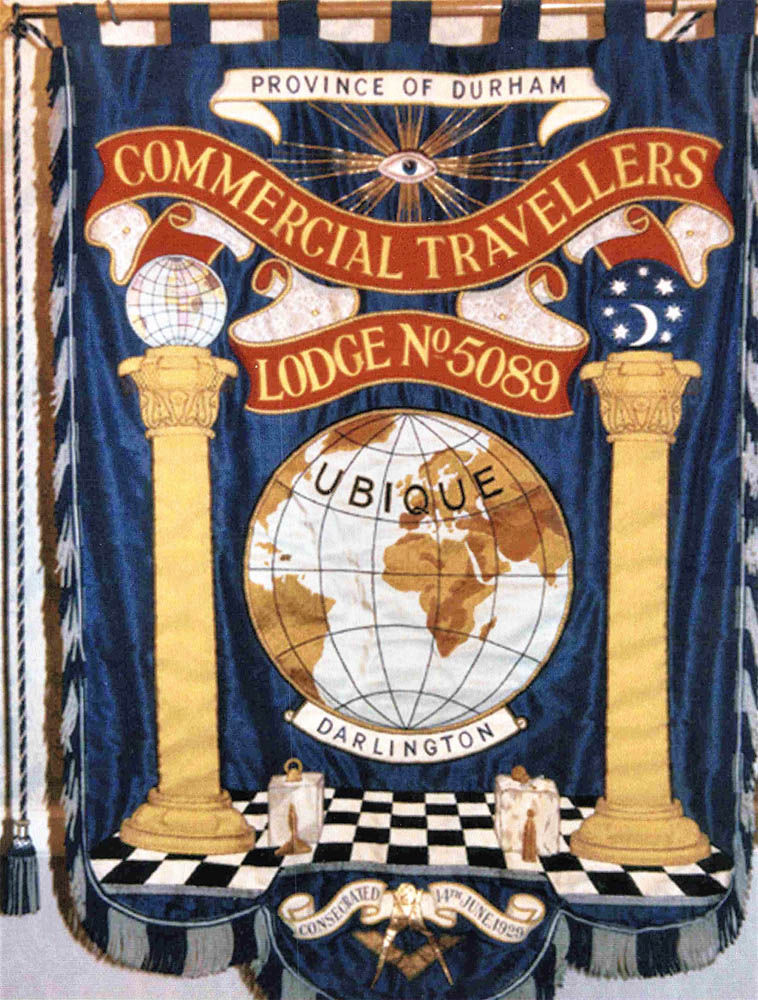
A commercial traveller was a travelling salesman. He carried a case of samples from town to town, taking orders from shopkeepers on behalf of a manufacturer or wholesaler. It was a job lived on trains and in commercial hotels, and Darlington was a natural base for it: a railway town, with lines running in every direction across the North East and Yorkshire. The trade had its own culture too. In Darlington, commercial travellers even founded their own Masonic lodge in 1928, and the lodge still jokes about its founders today, saying a Commercial Traveller needs to be a charmer in order to succeed in business. Whether our Frederick Allenby was a charmer, I can only guess.
The name of the street survives. Hargreave Terrace is now part of the Park Place area in the centre of Darlington, a few minutes from St Cuthbert's Church, which dates back to the 12th century, and within walking distance of South Park. Today it's modern housing, but in 1902 it was home, however briefly, to a young mother, her newborn son and, perhaps, the father whose name he carried.
The marriage I can't find
This is where the puzzle begins. So far I haven't found any marriage between Frederick Allenby and Annie Foster, and by the time of the 1911 census, Annie had gone back to her maiden name of Foster. Her son was now Foster too.
And there's one small word on that 1911 census that I keep coming back to. Annie is described as a spinster. Not married, not widowed, not separated: a spinster. It might have been the census-taker's assumption, or it might have been the truth, told plainly on a form where it mattered less than on a birth certificate. Either there was a marriage that I haven't found yet, or there never was one, and "Annie Allenby" was a name taken for the sake of respectability in 1902. For a young unmarried mother at the start of the twentieth century, that would have been an entirely understandable choice.
What happened to Frederick senior is still a mystery. But to understand the world young Fred grew up in, we need to go back a generation, to his mother Annie.
A pit village childhood
Annie Sissons Foster was born on 15 April 1876 in Willington, County Durham, the daughter of William Foster, a joiner, and Ann Isabella Toulson.
Willington was a mining village. Brancepeth Colliery opened there in 1840, and by the 1890s its pits, coke ovens and brickworks employed over 1,200 men and boys and were the mainstay of the district. A joiner would have found plenty of work in a place like that, among the pit buildings, the rows of colliery houses and the chapels.

In the spring of 1881, the census found the family on Lydia Street, Willington. Ann Isabella, just 39, is already a widow, at the head of a household of five children:
Mary Eleanor Foster, 6, a scholar
Annie Sissons Foster, 4
William Toulson Foster, 3
John Edward Foster, 2
Thomas Pearson Foster, a newborn
There's also an 18-year-old boarder, William Carr, a labourer, which tells its own story. With her husband gone and a baby in her arms, Ann was taking in a lodger to help pay the rent.
William Foster died in 1881 in his early forties and, very sadly, baby Thomas Pearson lived only a short while, dying that same year. School admission registers from1881 show little Annie being enrolled at Willington Church of England Mixed and Infants School and at the Rosa Street Board School in Spennymoor, the kind of pattern you see when a newly widowed mother is moving house to find work, family or cheaper rooms.
A terrible September
By 1883, Ann had remarried. Her second husband was William Edward Lawson, and the family moved to Darlington, where their son Edward Palm Lawson was born that year.
Then, in September 1886, while the family were living at 28 Zetland Street, Darlington, scarlet fever came into the house.
On 7 September, twelve-year-old Mary Eleanor died. I ordered her death certificate, which records that she died of malignant scarlet fever after just 36 hours.

Three days later, on 10 September, both of her brothers, John Edward and William Toulson, died on the same day. The notice in the Yorkshire Gazette describes them as the "two only surviving sons of the late Wm. Foster, late of Willington."

Mary's death was registered not by her mother but by a neighbour, Margaret Mackenzie of 13 Zetland Street. I can only imagine what state the household was in that week: a mother nursing dying children, a three-year-old in the house, and ten-year-old Annie somehow spared. Within five years Ann Isabella had lost her first husband and four of her five children by him. Annie and her half-brother, Edward, were the only children left.
Ann Isabella: back where she began
Annie's mother is a remarkable figure in her own right. Ann Isabella Toulson was born around 1842 in Middleton One Row, a village on the River Tees south-east of Darlington. It was an unusual place to be born: a Victorian gazetteer described it as a row of well built houses, extending over a line of nearly ½ a mile, together with two good hotels, erected chiefly for the accommodation of visitors to Dinsdale spa. It was a little spa resort perched on a high riverbank, a long way from the pit heaps of Willington.
William Lawson died in 1893, and Ann married for a third time in 1895 to Edward Bollands, but the marriage wasn't to last long - he unfortunately died the next year. Ann Isabella went on to marry for a fourth and final time in 1901. Her new husband, John William Teasdale, was a tailor and a widower who had lost his wife Jane in 1898. In the 1901 census the couple are living at Killing Hall, Middleton St George, which is Ann's home parish and John's birthplace too. After decades of upheaval, Ann had come home.
Living with them was Annie, now 24 and still single. Within about eighteen months she would be a mother at Hargreaves Terrace in Darlington.
(There's one more possible sighting of Annie in between. In 1891, a 15-year-old Ann Foster was working as a servant at 23 Hotspur Street, Tynemouth, in the household of a widowed boarding-house keeper and her daughters. Her birthplace is given as Urpeth - a place not too far from Willington - but I can't be sure it's our Annie. If it is, it would be her first link to Tyneside, where she would later make her home.)
A new life on Tyneside
By April 1911, Annie had moved north to Newcastle with her son. They were living at 4 Falconar Street with her half-brother Edward Palm Lawson, now 28 and the head of the household, working as a commission agent in fruit and potatoes. Ann Isabella, widowed for a fourth time, was living with them. Young Fred, eight years old and listed as Edward's nephew, was at school.
Falconar Street runs through Shieldfield, just north-east of the city centre, and it has a claim to fame of its own: an inscribed granite tablet on the street marks the birthplace of William Armstrong, 1st Baron Armstrong, the engineer and industrialist whose works did so much to shape the Tyne.
This little household must have seemed like a fresh start. But it didn't last. Annie died in the first quarter of 1912, less than a year after that census, at around 35 years old. Fred was just nine.
Raised by his uncle and grandmother
Fred stayed at Falconar Street, and in the 1921 census, taken in June of that year, he's still there: 18 years and 9 months old, working as a butcher's assistant for F. Miller, butcher, of Shields Street. Uncle Edward, now 38, has become a photo traveller, another travelling salesman's job, and Ann Isabella, at 79, is listed as retired. They also had a live-in servant, 61-year-old Jane Kay from Durham, which suggests the household was getting by reasonably well.
And here's a detail that made me sit up. Shield Street is exactly where, in the very same 1921 census, my Baker ancestors were living at number 166 and running their grocer's shop at number 164 (you can read about them in my post on Rose Edith Ferry). In 1921, a teenage butcher's boy from the Foster side of my tree was working on the same street as the grocer's family from the Rudd side. Two branches that wouldn't be joined for another generation may well have passed each other on the pavement and bought from each other's counters.
Edward and Ann were the adults who raised Fred through his teenage years, and he lost them both within a few years of each other. Ann Isabella died in 1925, having outlived all five of her children born to William Foster. Edward died in 1928. It's hard not to feel for Ann: a woman who married and widowed four times and buried so many of her children, yet was still there, in her eighties, to see her grandson grow up.
Fred's own family
Fred married Annie Edington Pattison (1908–1975), the daughter of Harry Pattison and Lily Catherine Eglon.
When the 1939 Register was taken, weeks after the outbreak of the Second World War, the family were living at 31 Back Hawes Street, Newcastle. Fred was working as a plater's labourer, classified as a heavy worker. Platers shaped and fitted the steel plates that formed a ship's hull, so this was shipyard work, the backbone of Tyneside industry, and about to become vital to the war effort. Annie was at home with their three daughters:
Annie Edington (born 1 November 1929) - known as Nancy
Marjorie (born 27 October 1932)
Doreen (born 9 October 1934) - who would later marry into the Rudd family and become my grandmother
After chatting to my mam, she has confirmed that she also lived at the Back Hawes Street address until around the age of four. As a child she called it Horse Street! From her recollection, the house included a tin bath in front of the fire.
So who was Frederick Allenby?
That is the question I'd most love to answer. A commercial traveller named Frederick Allenby was in Darlington, or at least on the paperwork there, in September 1902, and then he seems to disappear from his son's life altogether. Was he already married? Did he move on to another town and another life? Did he die young?
Fred himself grew up a Foster, raised by his mother, his grandmother and his uncle, and it was as Fred Foster that he worked, married and raised his daughters. Whatever part Frederick Allenby played, it was the Foster and Toulson women who made sure that little Frederick grew up.
If the name Frederick Allenby rings a bell in your own tree, I'd love to hear from you. In the meantime, I'll keep researching...