From the Workhouse to Hawes Street: George Eglon, Coach Painter

In a previous post I wrote about the four Eglon brothers of Hawes Street, Elswick, and the war that took the eldest of them. Their father, George Eglon, appeared in that story only in passing: a coach painter, the head of a busy terraced household, the man whose sons went to war.
This post is about George himself. The more I looked, the more remarkable his story became. The man who raised eight children in Hawes Street had spent much of his own childhood, and some of his young adulthood, in the Newcastle workhouse. Through his own hard work, he made his way out and built a home for his family.
George was my 3x great-grandfather.
Before the workhouse: Thomas and Elizabeth
George's father was Thomas Eglon, born around 1820 at Tynemouth. He married Elizabeth Wallace on 24 November 1846. Elizabeth came from Usworth, on the Durham side of the river.
In 1851, eleven years before George was born, the young family were living on Byker Bank, above the Ouseburn:
Name | Relationship | Age | Occupation | Born |
Thomas Eglon | Head | 31 | Waterman | North Shields, Northumberland |
Elizabeth Eglon | Wife | 27 | Usworth, Durham | |
Isaac Eglon | Son | 3 | Newcastle upon Tyne | |
Thomas Eglon | Son | 1 | Wallsend, Northumberland |
A waterman worked the boats on the Tyne, carrying goods and passengers up and down the river, alongside the better-known keelmen who took coal down to the waiting colliers.
Thomas's own father, Isaac Henzell Eglon, was a miller at Flatworth Mill, near the river between North Shields and Wallsend. Isaac's middle name records the family's descent from the Henzell glassmakers of the Ouseburn, and Thomas named his first son Isaac after him. Mary Ann was born around 1858 and George around 1862.
So George was born into a working family with a father in steady employment. Somewhere between his birth and 1871, Thomas died, and the family's footing went with him.
The workhouse on Westgate Road
The Newcastle Union Workhouse stood at the top of Westgate Hill, where Westgate Road meets Brighton Grove. In 1839 the Newcastle Board of Guardians decided to replace the town's old parish poorhouses with one large, purpose-built workhouse. The first block was standing by 1844.
By the time George knew it, it was a big institution. A separate workhouse infirmary had opened on the site in 1870. Inmates were sorted into men, women and children, and they lived by the Guardians' rules: plain uniform, set meals, set hours, and work in return for their keep.
The buildings had a long afterlife. The infirmary became Wingrove Hospital in 1921 and Newcastle General Hospital in 1930. Many people on Tyneside were born or treated there without knowing it had begun as the workhouse. (Tyne and Wear HER; Tyne and Wear Archives catalogue)
1871: Elizabeth, Mary Ann and George
On census night in April 1871, three Eglons were listed together among the workhouse residents:
Name | Status | Age | Occupation | Born |
Elizabeth Eglon | Widow | 44 | Charwoman | England |
Mary Ann Eglon | Scholar | 15 | Scholar | England |
George Eglon | Scholar | 8 | Scholar | England |

Elizabeth was a widow. With Thomas gone, so was the family's income. Charring, meaning cleaning other people's houses and offices for a day's pay, was one of the few kinds of work open to a widow. It rarely paid enough to keep a household with two children.
The column at the far right of the page holds one more word next to Elizabeth's name: Imbecile. The 1871 census asked enumerators to note whether anyone was "deaf and dumb", "blind", "imbecile or idiot" or "lunatic". To a Victorian enumerator, "imbecile" could mean anything from a learning disability to the confusion left by illness, grief or exhaustion. We can't know what lay behind the word in Elizabeth's case. It's worth noting that she wasn't unusual: five of the twenty-five people listed on the same census page are marked "imbecile". That suggests the label was applied freely within the workhouse, and it may tell us less about Elizabeth herself than it first seems to. It may help explain why she and her children could not manage outside.
For Mary Ann and George, "scholar" meant schooling. Children in the workhouse were taught reading, writing and arithmetic, and there was usually a strong emphasis on preparing them for work. George would have spent his days in the boys' section, apart from his mother, probably seeing her only at set times.
1881: a barber, aged 19
Ten years later George was back in the workhouse, or perhaps had never fully left it. The 1881 census lists George Eglon, unmarried, aged 19, born in Newcastle, as an inmate, and gives his occupation as barber.

That single word says a lot. At 19 George had a trade, or at least the beginnings of one. Workhouse boys were usually sent out at 13 or 14 to an apprenticeship or a job, and barbering was common work for a young man without money or connections. Being back inside at 19 doesn't have to mean he had failed. Plenty of young working men passed through the workhouse during a spell of illness, injury or unemployment, then left again once they could support themselves.
By then George was on his own. His mother Elizabeth had died in 1880, which is why she no longer appears beside him in the workhouse listing. Mary Ann seems to have married and left. At 19, George had lost both his parents and was the only one of the three still inside.
From barber to coach painter
By 1891 George had a different trade altogether: coach painter. It was skilled, respectable work. A coach painter built up a finish on horse-drawn carriages and cabs, and later on trams and railway carriages, coat by coat: filling, rubbing down, painting, varnishing and polishing until the surface shone. Then came the fine lining and lettering, done freehand with long, thin brushes. James Burgess's Practical Treatise on Coach-Building, published in 1881, gives a feel for the trade George was entering: it follows a carriage through priming, painting, colouring and varnishing, and has a whole chapter on ornamental work such as monograms.
It was not a trade you picked up overnight. Somewhere between 1881 and 1891, George must have found an employer willing to train him, or have learned it while working his way up from labouring jobs. For a young man with no money behind him and a workhouse address in his recent past, that was a real achievement.
By 1911 George's trade had shifted again. The census that year finds George, now in his late forties, described as a painter and paperhanger. Horse-drawn carriages were giving way to motor cars and electric trams, and there was less call for coach painters. George seems to have turned his brushwork to houses instead: painting and papering the homes of his neighbours. It's one more sign of a man who kept adapting so that he could keep working.
Annie and Hawes Street
George married Annie Edington, born in 1860, and by the mid-1880s they were starting a family. Their eldest son, Thomas, was born around 1886, and my 2x great-grandmother Lily Catherine followed in 1887.

By the 1891 census the family were living at 19 Hawes Street in Elswick. By 1901 they had moved a few doors along to number 25. It was an ordinary terraced street in the west end of Newcastle, close to the factories and workshops that employed most of the area. It was also barely a mile from the workhouse on Westgate Road.
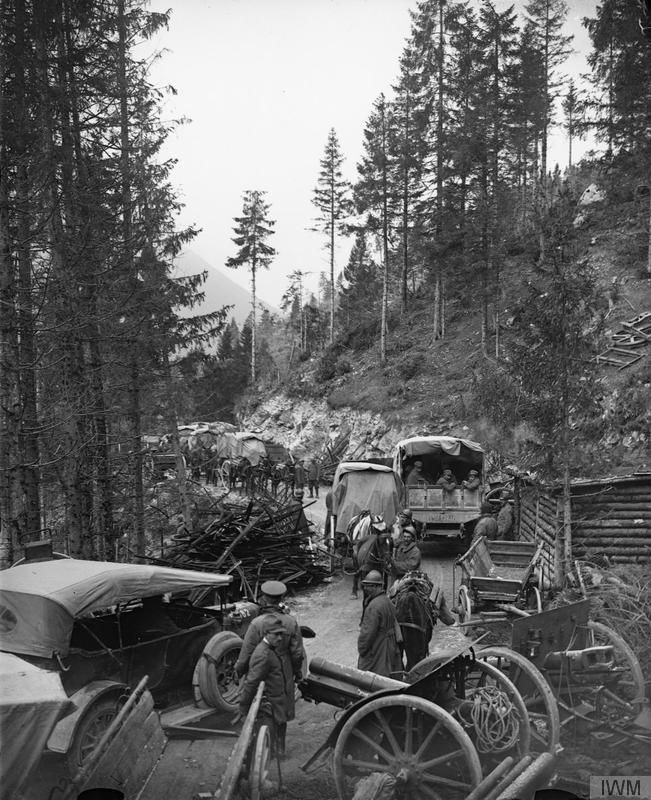
George and Annie had eight children: Thomas, Lily Catherine, Alice Ethel, George, Isabella, Mabel, Percy John and Norman. Mabel died in 1898 when she was about two. All four sons served in the First World War, and Thomas was killed in Italy in October 1918.
This is the heart of George's story. He had no inheritance, no parents to fall back on and no family business to step into. Everything he had, he earned: a trade learned the hard way, then year after year of long days in the paint shop, wage by wage, to keep a roof over a family of ten.
The boy who had been entered in the census as a pauper made a home. His children grew up in a home of their own on Hawes Street, with a father in work and a mother running the household. They never had to know the workhouse he had known.